
Pitch decks by category
Pitch deck design for hardware and robotics.
Hardware investors know the risks: margins, manufacturing, certification and long timelines. We rebuild hardware decks so each risk is named and the plan to retire it is plain.
Fixed prices from $1,500 to $10,000. No calls: everything in writing.
Slide 8
Unit cost falls with each production run
Illustration only. Any figures are invented for this sample slide.
4 deck types
Hardware and robotics decks we build
Each page sets out, slide by slide, what that deck has to show and the faults we fix.

Robotics deck
Robotics investors want to see robots doing paid work in real conditions, and economics that improve with every unit built..
8 slides explained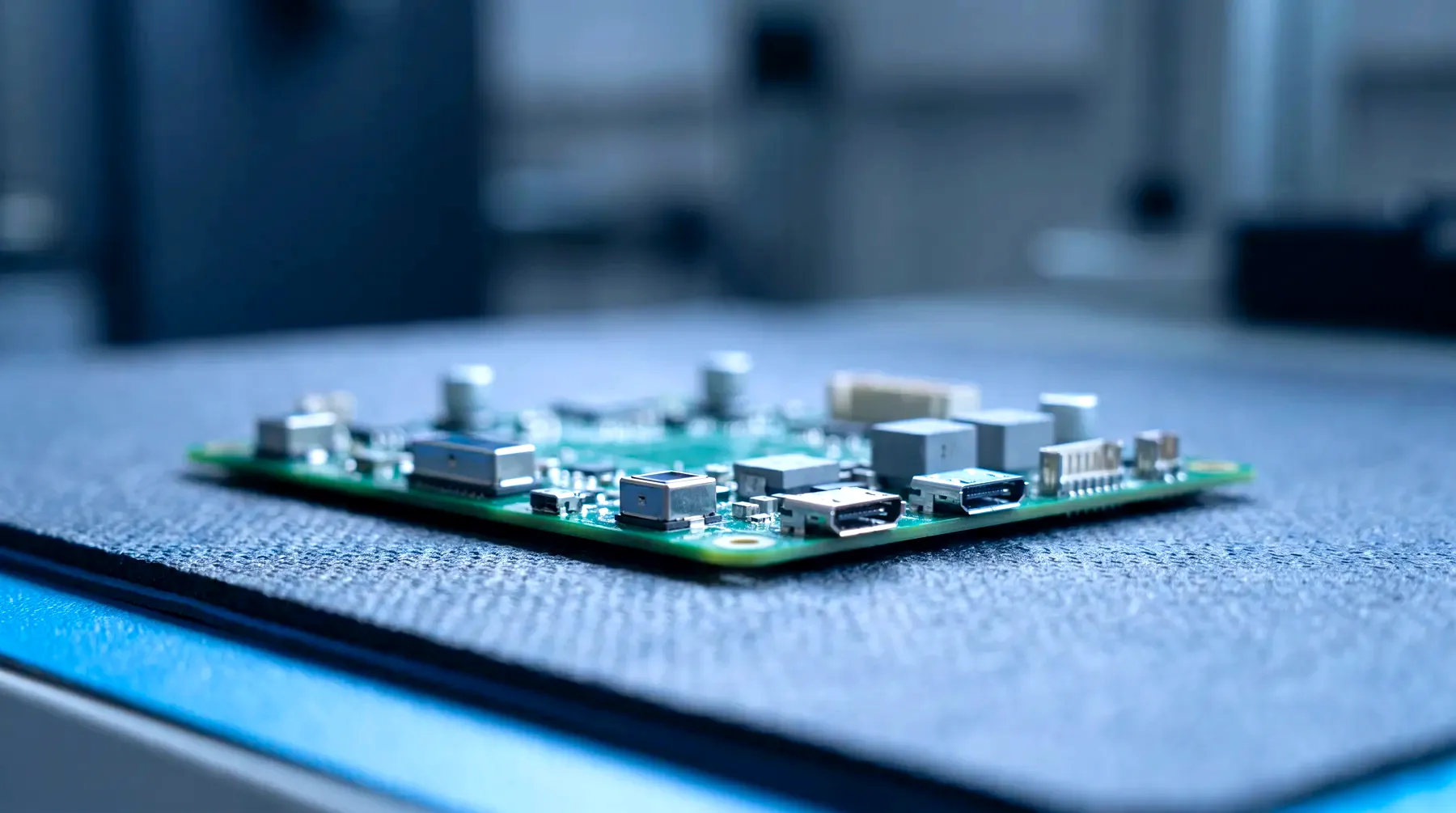
IoT and hardware deck
Hardware investors worry about margins and inventory.
8 slides explained
Aerospace deck
Aerospace companies need patient capital.
8 slides explained
Semiconductor deck
Chip startups ask for large amounts of capital against a long timeline.
8 slides explained
What a hardware deck has to show
- What the product does in real conditions, not in the lab.
- Unit cost now and at volume, and the margin at each.
- Manufacturing partner, minimums and lead times.
- Certification and regulatory approvals required.
- Recurring revenue attached to each unit, if any.
- Milestones and the capital each one needs.
Common faults in hardware drafts
Unit cost quoted at prototype volume. Certification left off the timeline. Pilot customers presented as contracts. Exploded product views too detailed to read. We redraw the product simply and put the economics beside it.
Drawing the product
One clean diagram of the device or system, made from your CAD images or photographs, tells an investor more than a page of specifications.
How it differs
How hardware and robotics decks differ
A general startup deck assumes the product can change weekly at little cost. A hardware deck must account for parts, tooling, factories, certification and inventory, each with lead times and cash needs. Investors read for the build stage, the cost per unit at volume and the milestones that retire risk. They often ask for a technical appendix an engineer can check. Customer evidence comes from field deployments and production orders, not sign-ups.
The questions behind every slide
What hardware and robotics investors and readers ask
Each answer names the slide or document where it belongs.
- 1
How do we show where we are in development?
Name the current build stage, such as engineering, design or production validation, and the date of the next. It tells investors which risks remain.
- 2
Should we show the full bill of materials?
Show landed cost per unit at current and target volume in the main deck. The full bill of materials belongs in the data room.
- 3
How do we present pilots that have not converted yet?
Label each as unpaid pilot, paid pilot or production order, and show what conversion depends on.
- 4
What do investors want to know about inventory and cash?
When cash leaves for parts and tooling and when it comes back from sales. A simple cash timing chart answers it.
- 5
Do deep tech decks need a technical appendix?
Usually. Many investors pass it to a technical advisor, so it should carry test methods and data while the main deck stays readable.
- 6
How do we raise for a long development timeline?
Tie the round to a milestone that changes the risk for the next investor, such as first production units or a passed certification, and show what it costs.
Glossary
Hardware and robotics terms, in plain English
- Bill of materials (BOM)
- A list of every part in a product, with quantities and costs.
- Landed cost
- The full cost to make and deliver one unit, including freight, duties and fulfillment.
- NRE
- Non-recurring engineering: one-time design and factory setup costs.
- EVT, DVT and PVT
- Engineering, design and production validation tests: the build stages before mass production.
- Minimum order quantity (MOQ)
- The smallest order a factory or supplier will accept.
- Single-source part
- A component available from only one supplier, which creates supply risk.
Slide by slide: what goes in a hardware and robotics deck
Product in use
What it does in real conditions.
Customer economics
What the buyer saves or earns.
Unit cost and margin
Now and at volume.
Manufacturing
Partner, capacity and minimums.
Certification
Approvals and timeline.
Business model
Sale, lease or as a service.
Milestones
With the capital each needs.
Team
Engineering and production record.
Documents we produce
- Investor deck
- Product diagrams
- Technical appendix
- One-page summary
Packages start at $3,500 for a design rebuild of up to 15 slides and go to $10,000 for a full raise set. A written audit of an existing deck is $1,500.
Packages
Four packages, fixed prices.
Each package states what you get, how long it takes and where it stops. None includes a call.
Deck Audit
$1,500
3 business days
A written verdict on the deck you have, before you send it to anyone.
- Slide-by-slide notes inside your file
- The fixes that matter most, in order
- Story, numbers and design, each assessed
- The investor questions your deck leaves open
One deck, up to 20 slides. No redesign included.
Choose Deck AuditInvestor Finish
$3,500
5 business days
Your draft, rebuilt to investor standard. Design only.
- Up to 15 slides rebuilt
- Charts redrawn from your data
- Your brand applied throughout
- One written revision round
- Editable PowerPoint, Google Slides or Keynote
Design only: your wording and slide order stay as they are.
Choose Investor FinishFinish + Story
$6,500
8 business days
We restructure the argument, rewrite the headlines, then rebuild the deck.
- Up to 20 slides
- Narrative restructured from your draft and notes
- Headlines rewritten as full-sentence points
- Send-ahead PDF version
- Two written revision rounds
We work from your facts. No market research or financial modeling.
Choose Finish + StoryRaise Set
$10,000
12 business days
Everything a raise needs, in one matching set.
- Up to 30 slides plus appendix
- Investor one-pager
- Short teaser version for cold outreach
- Three written revision rounds
- All source files
No investor introductions, fundraising or legal advice.
Choose Raise SetNot included in any package: Calls or meetings · Market research · Financial modeling or valuation · Investor introductions · Fundraising, legal or securities advice. Extra slides and extra revision rounds are quoted in writing before we start them.
Questions, answered.
Can you draw our product from CAD files?+
Yes, from exported images or screenshots, as clean diagrams.
Do you design decks for defense customers?+
We design for civil hardware, robotics, aerospace and semiconductors.
How should we show manufacturing risk?+
As a short plan: partner, capacity, minimum order and the steps to scale.
How do hardware investors judge margins?+
At volume. Show today's unit cost and the path to the volume cost, with what drives the fall.
How much does a pitch deck cost here?+
A written Deck Audit is $1,500. Investor Finish, a design rebuild of up to 15 slides, is $3,500. Finish + Story, with the argument restructured, is $6,500. Raise Set, up to 30 slides with a one-pager and teaser, is $10,000.
How long does it take?+
Three business days for an audit, five for Investor Finish, eight for Finish + Story and twelve for Raise Set, counted from payment and a complete brief.
Is there a call?+
No. No package includes a call or meeting. You brief us in writing and comment in writing.
What do I need to send?+
Your draft deck in any editable format, or notes if you chose a package with writing, plus a few lines on who will read it and what you are asking for.
How do I pay?+
By card, through a secure payment link we send once scope and delivery date are confirmed in writing.
Further reading
Sources we read when writing this page. General information only; not legal, tax or investment advice.
Have a draft? Send it today.
Choose a package, link your deck and write a few lines about who it is for. You get scope, a delivery date and a payment link in writing.