Pitch decks by category
Pitch deck design for restaurant concepts.
Restaurant investors back an operator and a set of numbers per site. We rebuild concept decks so the food and the room draw the reader in, and the economics of one location make the case for the next ten.
Fixed prices from $1,500 to $10,000. No calls: everything in writing.
Slide 9
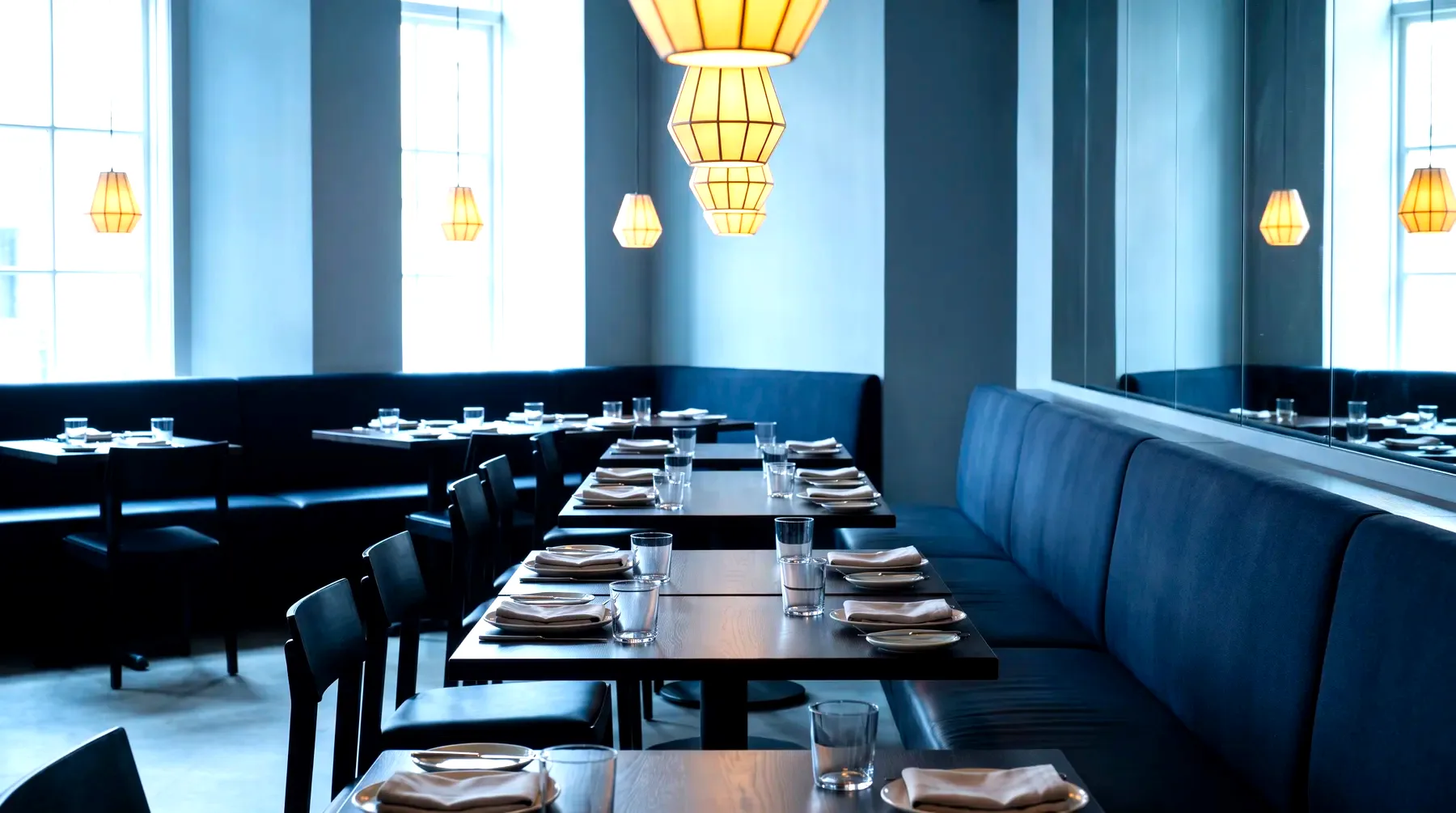
One location pays back its build cost in 26 months
Illustration only. Any figures are invented for this sample slide.
3 deck types
Restaurants decks we build
Each page sets out, slide by slide, what that deck has to show and the faults we fix.



What a restaurant deck has to show
- The concept in a sentence, and who it is for.
- The menu and what makes it distinct.
- The economics of one site: build cost, sales, margin, payback.
- The location plan and why those sites.
- The operator's record.
- What the investment pays for, opening by opening.
Common faults in concept drafts
Mood boards with no numbers. Projected sales without a comparable. Build costs missing equipment or working capital. We put the single-site model on one clear slide and tie the raise to openings.
Who reads it
Investors, lenders and landlords each want different pages. Raise Set gives you the full deck, a one-page summary and a short teaser to send first.
How it differs
How restaurants decks differ
A general startup deck sells software or a product that scales without rent. A restaurant deck sells physical sites, each with a build cost, a lease and a team, so the proof is the economics of one location and the operator's record of opening more. Landlords and lenders read these decks as well as investors, each with different questions. The food and the room draw readers in, but the single-site model decides the outcome.
The questions behind every slide
What restaurants investors and readers ask
Each answer names the slide or document where it belongs.
- 1
Investor, lender or landlord: which deck do we need first?
The one tied to your next decision. A site you want this month needs the landlord presentation; a raise needs the investor deck.
- 2
How do lenders read a restaurant deck differently from investors?
Lenders focus on repayment: cash flow, guarantees and collateral. Investors focus on returns across openings.
- 3
Should every location's numbers be shown, including weak ones?
Yes. Readers check, and a full set is more credible than the best site alone.
- 4
How do we show food without turning the deck into a menu?
A few strong dishes with their price points, and the full menu in the appendix.
- 5
What makes a cafe deck different from a full-service one?
Cafe decks lean on throughput and cost per cup; full-service decks lean on covers, table turns and labor.
- 6
We have one site and a second planned. Is a group deck premature?
No. Show the first site's real figures, the second site's plan labeled as a plan, and what you learned from opening the first.
Glossary
Restaurants terms, in plain English
- Occupancy cost
- Rent plus shared area charges, property taxes and building insurance, often compared with sales.
- Prime cost
- Food cost and labor cost added together, the largest controllable costs in a restaurant.
- Pre-opening costs
- One-time spending before a site opens, such as hiring, training and launch marketing.
- Same-store sales
- Sales growth at locations open long enough to compare with the prior year.
- Build-out
- Construction and fit-out that turns an empty space into a working restaurant.
- Average ticket
- Total sales divided by the number of orders or guest checks.
Slide by slide: what goes in a restaurants deck
Concept
One sentence, the customer and the occasion.
Menu
Signature items and price points.
Unit economics
Build-out cost, average unit volume, food and labor cost, four-wall margin and payback.
Location
Site criteria, target neighborhoods and lease terms sought.
Existing performance
Sales and margin of current locations.
Operator
Team record in opening and running sites.
Rollout
Openings by year and capital per opening.
Use of funds
Build-out, equipment, pre-opening and working capital.
Documents we produce
- Investor deck
- Landlord presentation
- One-page concept summary
- Teaser
Packages start at $3,500 for a design rebuild of up to 15 slides and go to $10,000 for a full raise set. A written audit of an existing deck is $1,500.
Packages
Four packages, fixed prices.
Each package states what you get, how long it takes and where it stops. None includes a call.
Deck Audit
$1,500
3 business days
A written verdict on the deck you have, before you send it to anyone.
- Slide-by-slide notes inside your file
- The fixes that matter most, in order
- Story, numbers and design, each assessed
- The investor questions your deck leaves open
One deck, up to 20 slides. No redesign included.
Choose Deck AuditInvestor Finish
$3,500
5 business days
Your draft, rebuilt to investor standard. Design only.
- Up to 15 slides rebuilt
- Charts redrawn from your data
- Your brand applied throughout
- One written revision round
- Editable PowerPoint, Google Slides or Keynote
Design only: your wording and slide order stay as they are.
Choose Investor FinishFinish + Story
$6,500
8 business days
We restructure the argument, rewrite the headlines, then rebuild the deck.
- Up to 20 slides
- Narrative restructured from your draft and notes
- Headlines rewritten as full-sentence points
- Send-ahead PDF version
- Two written revision rounds
We work from your facts. No market research or financial modeling.
Choose Finish + StoryRaise Set
$10,000
12 business days
Everything a raise needs, in one matching set.
- Up to 30 slides plus appendix
- Investor one-pager
- Short teaser version for cold outreach
- Three written revision rounds
- All source files
No investor introductions, fundraising or legal advice.
Choose Raise SetNot included in any package: Calls or meetings · Market research · Financial modeling or valuation · Investor introductions · Fundraising, legal or securities advice. Extra slides and extra revision rounds are quoted in writing before we start them.
Questions, answered.
We have one location. Is a deck worth it?+
If you are raising for a second, yes. Your first site's real numbers are the strongest slide you have.
Can you design the menu too?+
No. We design the deck and its supporting documents.
Do you work with food product brands?+
Yes. See the e-commerce page for how a product brand deck differs.
What is a landlord presentation?+
A short version of the deck that shows the concept, the operator and the financial strength, used when applying for a site.
How detailed should the single-site model be?+
One slide in the main deck with the headline figures, and the full model in the appendix.
How much does a pitch deck cost here?+
A written Deck Audit is $1,500. Investor Finish, a design rebuild of up to 15 slides, is $3,500. Finish + Story, with the argument restructured, is $6,500. Raise Set, up to 30 slides with a one-pager and teaser, is $10,000.
How long does it take?+
Three business days for an audit, five for Investor Finish, eight for Finish + Story and twelve for Raise Set, counted from payment and a complete brief.
Is there a call?+
No. No package includes a call or meeting. You brief us in writing and comment in writing.
What do I need to send?+
Your draft deck in any editable format, or notes if you chose a package with writing, plus a few lines on who will read it and what you are asking for.
How do I pay?+
By card, through a secure payment link we send once scope and delivery date are confirmed in writing.
Further reading
Sources we read when writing this page. General information only; not legal, tax or investment advice.
Have a draft? Send it today.
Choose a package, link your deck and write a few lines about who it is for. You get scope, a delivery date and a payment link in writing.